
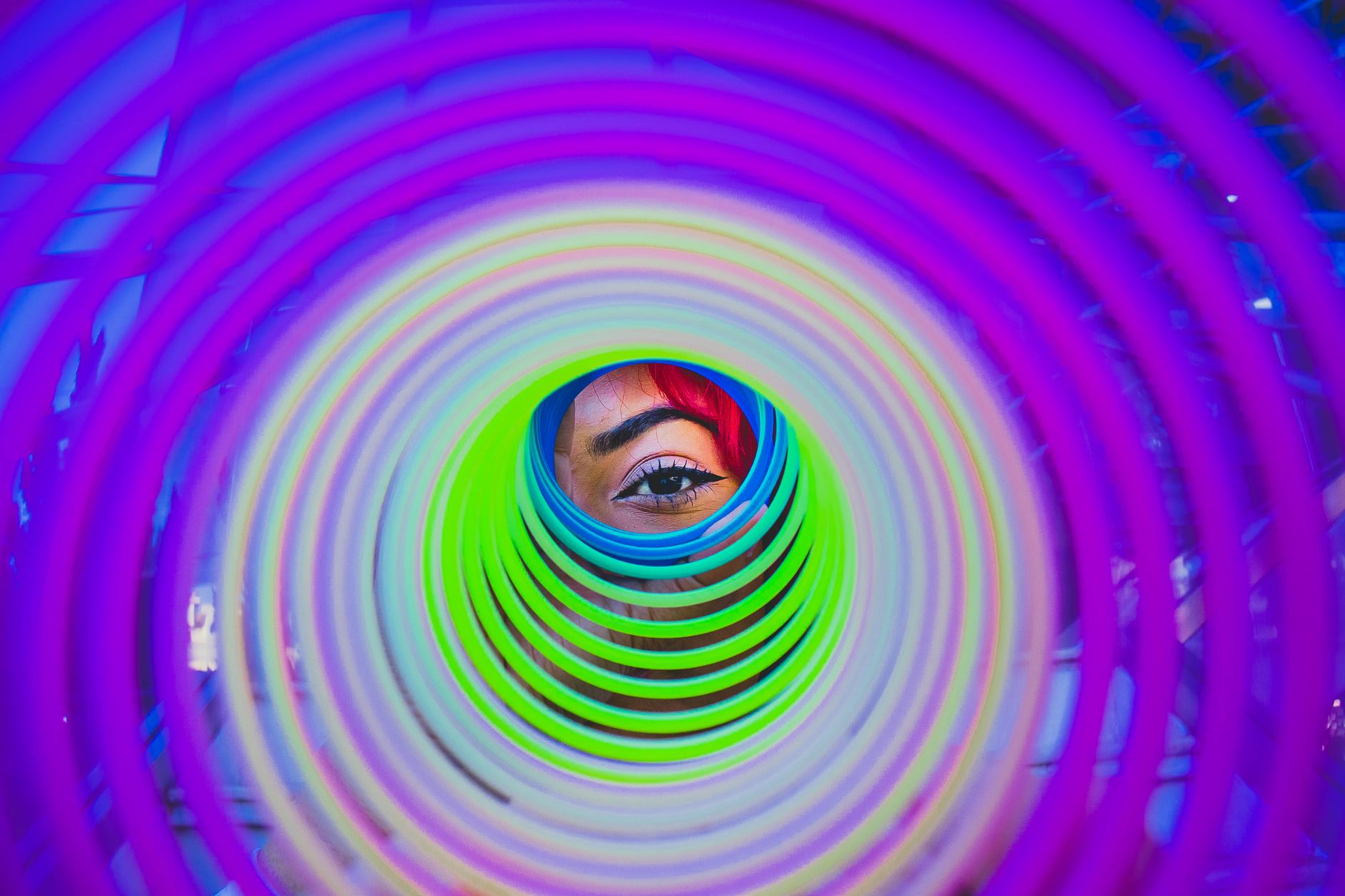
Picture this: two people leave the same dinner party. One drives home feeling warm, seen, and grateful — the conversation was rich, the energy was good, it was exactly what she needed. The other leaves feeling overlooked, a little lonely, and vaguely like she said something wrong. Same evening. Same people. Same room. Two completely different realities.
Which one was right about the night they had?
Both of them. This is the thing that nobody tells us growing up: we don’t all experience the same world. We each experience a version of it — one that’s been shaped by our upbringing, our wounds, our values, our hopes, the particular way our nervous system has learned to move through life. Reality, as we experience it, is always filtered. And the moment we start to genuinely understand that — not just intellectually, but in our bones — something shifts. In our relationships and in our inner life.
What Does It Actually Mean to See Through Someone Else’s Eyes?
Perspective-taking is simply the ability to pause your own frame of reference long enough to genuinely consider how someone else might be experiencing a situation. It’s asking: what is it like to be them, right now, in this moment? It sounds simple but isn’t always.
Here’s what perspective-taking is not: it is not agreement. It is not validation of harmful behavior. It is not erasing your own experience or deciding your feelings don’t count. You can fully understand why someone did what they did and still disagree with it. You can hold compassion for where someone is coming from and still maintain your boundaries. Understanding another perspective doesn’t mean surrendering your own. What it does mean is this: two people can both be completely sincere, completely genuine, and still see the same situation in entirely different ways — and both of those experiences can be real and valid at once.
Think about a friendship where you felt like you were always reaching out first. From your perspective, the effort felt one-sided. You felt undervalued, maybe even invisible. But from your friend’s side? She’s been in survival mode — working two jobs, keeping her head above water, silently terrified that she’s losing everyone because she doesn’t have the bandwidth to show up the way she wants to. She’s not indifferent. She’s drowning. Neither of you is lying about your experience. Neither of you is the villain. This plays out everywhere — in relationships, in families, in workplaces. The colleague who seems cold and unenthusiastic in meetings might be an introvert processing everything internally rather than out loud. The parent who never said “I love you” might come from a generation that was taught love was shown through provision, not words. The partner who shuts down during conflict might have learned early that expressing emotion wasn’t safe. Understanding these things doesn’t excuse harm. But it does open a door — to connection, to conversation, to something more real than the story we’ve been holding in isolation.
Why It’s So Hard to See Past Our Own Perspective
If perspective-taking is so transformative, why don’t we do it more? Because our nervous systems are wired to protect us, and that protective wiring doesn’t naturally lend itself to nuance.
When we’re in conflict — or even just feeling misunderstood — a primal part of us wants to be right. The ego isn’t a villain; it’s just trying to keep us safe and coherent. But when being right becomes more important than being connected, we stop seeing people and start defending positions. Emotional triggers make this even harder. When something activates a wound from our past — an old fear of being abandoned, dismissed, or controlled — we stop responding to what’s actually happening in front of us and start reacting to what it reminds us of. Confirmation bias compounds everything. Once we’ve decided someone is selfish, or that a situation is unfair, we unconsciously filter all new information through that lens — noticing evidence that confirms it and dismissing anything that doesn’t. And perhaps the deepest barrier of all: the fear that if we understand someone else’s perspective, we lose our own. That compassion is somehow a concession. That seeing their side means our side disappears. This belief — quiet, often unconscious — makes people cling harder to their version of events, not out of stubbornness, but out of a very human need to feel that their experience matters. It does matter and so does theirs.
How Expanding Your Perspective Changes Your Relationships
The benefits of perspective-taking are not subtle. They change everything about the texture of your connections. Think about the last time you felt truly, deeply understood by someone. Not just heard, but actually understood — like they got the full weight of your experience without judgment. That feeling of being seen is one of the most profound things one human can offer another. And it only comes from someone who has practiced setting their own frame down long enough to genuinely enter yours. When we develop this capacity, our communication transforms. Instead of responding defensively to what someone says, we get curious about what’s underneath it. Instead of hearing criticism as an attack, we ask ourselves: what is this person actually needing? What might they be feeling that they don’t have words for yet? Conflict starts to feel less like a battlefield and more like a puzzle — something to figure out together rather than a war to be won.
How Understanding Others Helps You Understand Yourself
Here’s the part that often surprises people: the more you practice seeing through other people’s eyes, the more clearly you start to see yourself. When you regularly challenge yourself to consider perspectives outside your own, you begin to notice your blind spots — the biases you didn’t know you had, the assumptions you’d never thought to question, the stories you’ve been telling yourself on repeat without ever examining them. You realize that the things that irritate you most in others are often the things you’re least comfortable seeing in yourself. You start to catch your own emotional reactions before they hijack your behavior. This is the heart of emotional intelligence.
Perspective-taking is one of the most reliable ways to build this skill. Because when you practice holding multiple truths at once, you also become more comfortable with your own complexity. You create room for the messier, more honest version of yourself. The result is something that looks like freedom. You become less reactive. Less easily destabilized. More grounded in who you are — not because nothing touches you, but because you’ve learned to hold more without losing your footing. Self-awareness grows.
Practical Ways to Build the Perspective-Taking Muscle
Like any real capacity, this one is developed through practice. Here are some ways to start: ask yourself “What might I be missing?” — Before you finalize a conclusion about a person or a situation, pause and genuinely ask this question. Not rhetorically. Really sit with it. What information don’t you have? What context might change the picture?
Journal from another person’s point of view. When you’re in conflict or confusion about a relationship, try writing a journal entry as the other person. Inhabit their voice, their fears, their history as you understand it. You don’t have to get it perfectly right. The practice of trying is what opens something. Replace assumptions with questions. Instead of deciding you know why someone did something, ask. “What was going on for you when that happened?” is one of the most powerful things you can say in any relationship.
Notice your emotional reactions before drawing conclusions. When something bothers you, get curious about the feeling before you reach for an explanation. Ask: is this response about what’s actually happening right now, or is it activating something older and more tender? Your emotional reactions are data. You don’t have to agree with anyone. You just have to be willing to understand. Practice curiosity over certainty.
A Gentler Truth: We Never See the Whole Picture
There’s a quiet spiritual undercurrent to all of this that’s worth naming. At some point in the practice of perspective-taking, you come face to face with something humbling: none of us ever see the full picture. Not of a situation, not of another person, not even of ourselves. We are always working with partial information, filtered through a lens we didn’t entirely choose and can’t entirely see around.
When we hold our perspective a little more loosely something softens. The need to be definitively right about everything becomes less urgent. The defensiveness that exhausts us starts to quiet. We become a little more patient with ourselves and others, because we understand that everyone is navigating a reality we only partially see.
You Don’t Lose Yourself by Seeing Others More Clearly
Understanding multiple perspectives is not an act of self-erasure. It is not people-pleasing or losing your edge or abandoning what you know to be true about your own experience.
It is, in fact, one of the most confident things you can do — because it requires a self that’s secure enough to look beyond itself.
When you can hold your own experience and someone else’s with equal care, when you can stay curious instead of defensive — you become more whole. More connected. More intelligent, emotionally. More free. More at peace. The world gets richer. Your relationships go deeper. And you become someone who makes other people feel genuinely seen — which, if you’ve ever experienced it on the receiving end, you know is one of the most powerful gifts there is.
Reflective Question:
Is there a situation in your life right now where you’ve only been holding one side of the story — and what might open up if you allowed yourself to gently consider another?
With love,
The Malleable Path.